Procurement Pulse Newsletter - October 2026


Procurement Pulse
Volume 3, Issue 1 | From the Office of Procurement and Contract Management
Publication Date: October 2026
From the Office of Procurement and Contract Management
Contract Creation Guidelines Available
Using approved systems throughout the contract lifecycleProcurement and Contract Management has issued updated guidance reinforcing the required use of approved systems when creating and managing Minnesota State contracts. Contracts must be created, routed, approved, executed, and retained in the appropriate e-procurement or contract management system.
Following these processes supports consistent approvals, segregation of duties, transparency, contract visibility, records retention, reporting, and audit readiness.
Use the Appropriate System
- JAGGAER, also known as Marketplace: Non-construction contracts
- e-Builder, now known as Trimble Unity Construct: Construction, capital project, renovation, and facilities-related contracts
- Salesforce: Workforce Development contracts
Cooperative Contracts Still Require Documentation
Using a cooperative contract may satisfy or replace the need for a separate sourcing event. However, it does not eliminate Minnesota State contract documentation, review, approval, or system-record requirements.
Employees should review the full memo before initiating a contract or making a commitment to a supplier or contractor.
Read the Contract Creation Guidelines
Understanding “As to Form and Execution”
A final checkpoint for contract readinessThe “As to Form and Execution” signer reviews whether required contracting procedures have been followed and the agreement has been properly signed. This review is distinct from legal review during drafting.
Reviewing the Form
Confirm that an approved template was used or that a non-standard agreement received the required legal review. Verify that required funds have been encumbered.
Reviewing the Execution
Confirm that required signatures are present and dated, and that the individuals signing have authority to do so. The person completing this review must also be authorized to perform the form and execution approval.
Resolve Questions Before Signing
If documentation, authority, or signatures are unclear, seek assistance from Procurement and Contract Management before completing the approval.
Information Beat
Procurement and Contract Management
Cashiering Services: More Than a Card Reader
Connecting student payments, campus operations, and financial recordsWhen we think of cashiering, a card reader at a service counter may come to mind. But processing student payments involves much more than accepting a card. Behind each transaction are processes that help ensure payments are secure, recorded accurately, and connected to the correct student account and financial records.
Minnesota State's Cashiering Services RFP is currently open. The sourcing event is exploring a solution that supports the broader payment needs of our colleges and universities and the employees who manage these transactions.
Payment Options and Convenience
Students and other customers make payments online and in person. Cashiering needs span cash, checks, cards, electronic bank payments, and digital wallets, along with tuition, fees, and other campus transactions. A future solution should make these experiences easier to navigate while supporting campus business processes.
Reconciliation and Visibility
Accepting a payment is only the beginning. Business offices must match transactions to deposits and account records, process refunds, investigate discrepancies, and manage chargebacks. Clear reporting and reliable reconciliation tools help staff resolve exceptions and maintain accurate financial records.
Security and Accountability
Protecting payment and student information is essential. Important capabilities include payment security, appropriate access controls, approval workflows, and audit trails that document who processed or changed a transaction.
Integration with Institutional Systems
Cashiering must connect with the systems campuses use to manage student accounts and finances. Integration with Workday and other institutional platforms is a key consideration for reducing duplicate entry, improving accuracy, and giving staff timely access to payment information.
Procurement as Quarterback
Calling the right plays to move sourcing and contracting forwardFall is in the air, and football is back! The season offers a useful analogy for effective procurement: Procurement should be the quarterback of the deal.
A quarterback does not play every position, make every decision, or score every point. The role is to understand the objective, read the field, bring the right people into the play, and keep the team moving toward the end zone. Procurement serves a similar role by coordinating expertise and helping the organization move toward a sound decision.
The Foundation: A Playbook
Every team has a playbook with formations, assignments, and strategies designed to move the ball down the field. Procurement has a playbook, too: policies, procedures, templates, contracts, approval processes, and sourcing strategies. These tools establish expectations, create consistency, and help protect the organization.
Read the Field Before Calling the Play
A quarterback must see more than a single receiver's route. Procurement must also consider the entire field. A seemingly straightforward request may involve changing stakeholder needs, legal concerns, funding questions, technology integrations, or supplier delivery challenges. Recognizing those connections early helps the team choose the right approach.
First Down: Manage the Clock
Timing is part of the strategy. Procurement often enters a deal when a contract is about to expire, an implementation date has already been promised, or a supplier's pricing deadline is approaching. Waiting until the final minutes limits the available plays.
Effective planning works backward from the required outcome, allowing time for decisions, dependencies, approvals, negotiations, and credible alternatives. Managing the clock helps prevent avoidable urgency from making the decision for us.
Teammates: Bring in the Right Expertise
Football is a team sport, but not every player is on the field for every play. Similarly, procurement should coordinate the reviews appropriate to the purchase and its requirements. The goal is to recognize when specific expertise is needed and involve the right teammates at the right time.
Call an Audible: Prepare for the Unexpected
Not every play goes according to plan. A quarterback may reach the line of scrimmage, recognize an unexpected challenge, and change the play. Procurement professionals must also adapt. That may mean adjusting the scope, changing the sourcing strategy, involving additional expertise, or finding another path forward within established requirements.
Celebrate the Small Wins
Procurement may coordinate the deal, but success belongs to the team. Clearer requirements, timely reviews, resolved concerns, and successful negotiations all move the ball forward. Not every play produces a touchdown, but each should move the organization toward a better decision.
Sourcing Sync
Procurement and Contract Management
RFI Before RFP: When Supplier Feedback Helps
Testing requirements before launching a competitive solicitationStrong sourcing starts with clear requirements. But when a campus is exploring unfamiliar technology, a complex service, or a changing market, it can be difficult to know whether draft requirements accurately describe what is needed and what suppliers can deliver. A Request for Information (RFI) can help answer those questions before a Request for Proposal (RFP) is issued.
Are the Requirements Clear?
Language that makes sense internally may mean something different to suppliers. An RFI invites suppliers to identify ambiguous terms, explain how they interpret a requirement, and suggest wording that would help them prepare a more accurate response.
Are the Expectations Realistic?
Supplier feedback can help distinguish capabilities commonly available in the market from those requiring customization, additional cost, or longer implementation timelines. It can also identify requirements that unnecessarily limit competition or describe one supplier's approach too closely.
What Are We Missing?
An RFI can reveal overlooked requirements involving integration, accessibility, security, training, ongoing support, or the transition from an existing solution. Identifying these gaps early helps the sourcing team build a more complete solicitation.
Ask for Specific Feedback
Give suppliers draft requirements and ask them to explain where improvements are needed:
- Which requirements need clarification?
- Which should be mandatory or preferred?
- Are any duplicative or overly restrictive?
- What important requirements are missing?
- What would affect cost or implementation timelines?
Use Feedback to Strengthen the RFP
The sourcing team evaluates supplier input alongside campus needs and applicable requirements. Feedback informs the final scope; it does not automatically determine it. The goal is a solicitation that clearly communicates the business need and gives suppliers a fair opportunity to propose solutions.
Master Contracts and Sourcing Updates
A newly awarded solution and systemwide sourcing events in progressNewly Awarded: Enterprise Content Management System
Minnesota State has awarded a master contract to SoftDocs for an Enterprise Content Management System. The solution supports campuses in converting paper documents to electronic records, importing electronic files, using electronic forms, and integrating with institutional systems.
Vendor: SoftDocs
Contract Number: MNSCU-2026-063075
Term: Seven years
Other Master Sourcing Events in Progress
Enterprise Library System
Status: Under Evaluation
Systemwide Nonresident Alien Tax Compliance Software and Services
Status: Open for Bidding
Systemwide Cashiering Services
Status: Open for Bidding
Systemwide Online and Remote Tutoring Services
Status: Open for Bidding
Minnesota State's Sourcing Journey
Five years of progress in digital sourcing and collaborationSince implementing the JAGGAER sourcing module in 2021, Minnesota State has advanced a more consistent and transparent approach to solicitation management. The platform has helped streamline sourcing activities, improve supplier engagement, and support procurement professionals across the system.
A Consistent Approach to Sourcing
JAGGAER provides a centralized location for sourcing events, supplier communications, proposal submissions, evaluations, and supporting documentation. Bringing these activities together reduces administrative effort and strengthens recordkeeping, compliance, and accountability.
Procurement professionals can more readily coordinate complex solicitations, while suppliers benefit from a standardized process for reviewing opportunities and submitting responses.
Beyond Replacing Manual Processes
Digital sourcing offers benefits beyond replacing paper files, spreadsheets, mailings, and manual tracking. It creates opportunities for collaboration, informed decision-making, and more structured supplier engagement. An integrated process allows procurement professionals to devote more attention to requirements, evaluations, and outcomes that deliver institutional value.
Supporting Responsible Stewardship
Five years after implementation, JAGGAER remains an important component of Minnesota State's procurement and contract management environment. As sourcing practices evolve, the platform continues to support fairness, transparency, efficiency, and responsible stewardship of public resources.
This progress reinforces the role of sourcing as a strategic function that connects institutional needs with supplier capabilities and supports sound procurement decisions.
Progress Through Partnership
Minnesota State's campuses, stakeholders, and suppliers have been essential to this transition. Adopting a new platform requires flexibility, patience, and a commitment to learning new processes. Their participation and feedback have contributed to more efficient, transparent, and consistent sourcing practices across the system.
Supplier Diversity
Procurement and Contract Management
Pride Month and Supplier Diversity
How inclusive procurement strengthens competition and innovationEach June, Pride Month provides an opportunity to recognize the contributions of LGBTQ+ communities and reflect on how procurement can support broader participation in the economy. While supplier diversity efforts often focus on expanding opportunities for historically underrepresented businesses, they also help strengthen competition, increase innovation, and build more resilient supply chains.
Procurement decisions influence economic opportunity. The suppliers we engage, the outreach we conduct, and the procurement practices we implement all affect who has the opportunity to compete for public business. By creating inclusive sourcing environments, institutions can encourage broader participation while maintaining a commitment to fairness, transparency, and best value.
Why Supplier Diversity Matters
- Expands competition and increases supplier participation.
- Introduces new ideas, products, and services into the marketplace.
- Strengthens supply chain resiliency by broadening supplier networks.
- Supports economic development and opportunity across diverse communities.
- Advances Minnesota State's commitment to equity and inclusion.
These efforts support Minnesota State's broader strategic objectives, including strengthening resources, expanding opportunity, and reducing equity gaps across the system.
Inclusive Procurement in Practice
Small actions that expand supplier participationSupplier diversity is not limited to a single month or outreach event. It is reflected in the day-to-day decisions procurement professionals make when developing sourcing strategies, conducting supplier outreach, evaluating barriers to participation, and creating opportunities for businesses to compete.
Building an inclusive supplier ecosystem requires consistent action. Procurement professionals can make meaningful impacts throughout the year by intentionally creating opportunities for diverse suppliers to learn about and compete for business opportunities.
Practical Strategies
- Expand supplier outreach when planning sourcing events.
- Review requirements for unnecessary barriers to participation.
- Leverage certified supplier directories and outreach networks.
- Encourage diverse supplier participation in informational sessions and pre-bid meetings.
- Evaluate procurement processes for unintended bias.
- Track supplier diversity outcomes to identify opportunities for improvement.
Supplier diversity is most successful when it becomes part of everyday procurement planning, not just a single initiative. Consistent outreach and thoughtful sourcing practices help create broader awareness of opportunities while maintaining fair and open competition.
JAGGAER Administration
Procurement and Contract Management
New Home Page and Contract Dashboard
Upcoming expirations and pending approvals at a glanceMinnesota State is introducing an enhanced JAGGAER home page alongside a new contract dashboard to help institutions monitor expiring contracts. Users who have not selected a custom home page will see the dashboard view as their default home page.
Find Your Contract Dashboard
Contract administrators, managers, and approvers will see a new tab titled Contract Dashboard - [CODE], such as Contract Dashboard - SYSOFF. This tab provides a centralized location to monitor contracts and manage responsibilities within your organization.
See What Needs Attention
- Upcoming expirations: Contracts set to expire within 90 days appear below the Organization Message, helping users plan for renewals and maintain continuity of services.
- Pending approvals: Approvals requiring your attention are highlighted for quick action, supporting timely processing.
- Additional details: Select the Total Contracts link at the top right of the widget to open the contract search page, where you can further filter or export contract information.
Make the Dashboard Work for You
Customize your view for easier contract oversightThe dashboard brings key contract information together on the home page, making it easier to find important items and take action. Customize your view to match your responsibilities and workload.
Customize Your View
- Adjust the number of contracts displayed on your home page.
- Sort contracts by fields such as end date or contract manager to identify items requiring attention.
- Select Total Contracts to access the full search page and additional filtering options.
Support Proactive Contract Management
By keeping upcoming expirations and pending approvals visible, the dashboard helps users focus on priorities, manage contracts proactively, and reduce the risk of delays, missed renewals, or contract lapses.
If you have questions or encounter issues, submit a ticket through the Service Desk. Timely reporting helps users receive support and supports continued improvement of the JAGGAER experience.
JAGGAER Service Desk
Preparing for a Simpler JAGGAER Registration Process
Exploring account management options as ISRS integration endsThe Procurement Team is preparing for the transition away from integration between ISRS and JAGGAER. As part of this work, we are exploring alternatives to the current process for managing JAGGAER user accounts.
Exploring Registration Directly in JAGGAER
One approach under discussion would move user registration entirely into JAGGAER. Users could begin registration directly in the platform, reducing reliance on integration between multiple systems.
This approach could offer several benefits:
- A simpler starting point: Users could initiate registration directly in JAGGAER.
- Real-time visibility: Administrators could monitor account setup and complete activation promptly when needed.
- Coordinated support: The Procurement Team could handle registration requests and related support without referring users to another system's support team.
Workday Updates
Procurement and Contract Management
Workday's fall release, 2026R2, launched on September 19 and introduced two new procurement features. Both features have now been activated: Quick Receipts and requestor-initiated change orders.
Quick Receipts
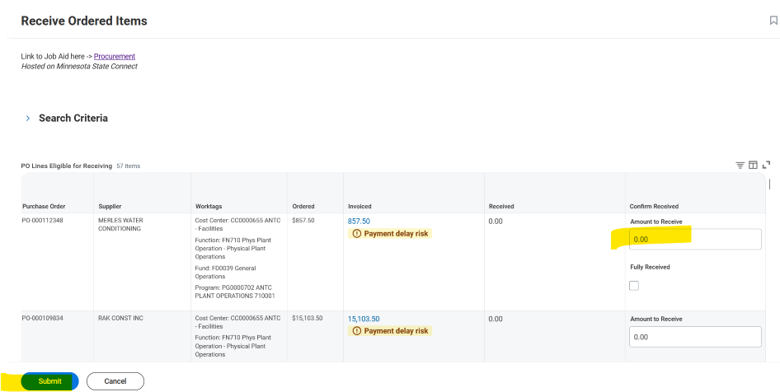
View purchase orders and create receipts in one placeUsers who have completed requisitions for goods or services now have access to a new dashboard through the Quick Receipts task.
The dashboard displays your purchase orders with remaining balances and allows you to create a receipt directly on the screen.
Requestor-Initiated Change Orders
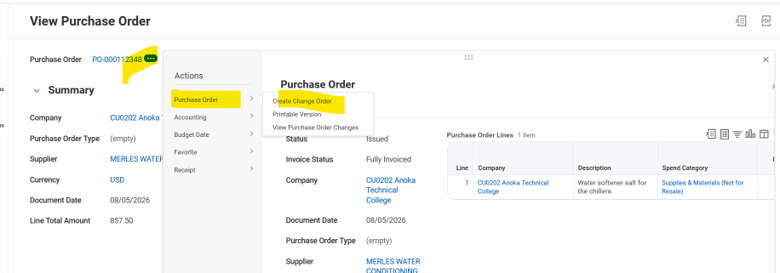
Request changes directly from a completed purchase orderRequisition requestors can now initiate their own change orders from a completed purchase order to add or change quantities or amounts.
Getting Started
- Search for your purchase order in Workday.
- Open the purchase order's Related Actions.
- Initiate a change order to add or change quantities or amounts.
Procurement Planner
Procurement and Contract Management
Minnesota State Professional Development Opportunities
Upcoming webinars and Procure-to-Pay conversationsOctober 8 at 10:30 a.m.
October 8 at 1:30 p.m.
November 12 at 1:30 p.m.
December 10 at 1:30 p.m.
External Professional Development Opportunities
Resources for continued learning- Admin – OSP Opportunities
- E&I Virtual Exchange
- Center for Procurement Excellence – The RFP Doctor
- NASPO Webinars
- NAEP Events
- NIGP Webinars & MNNIGP Webinars
Join CPE: Ask the RFP Doctor
A conversation about contract and vendor performanceHow can we better manage contracts, measure vendor performance, and turn stakeholder feedback into meaningful improvements? Join the Center for Procurement Excellence's Ask the RFP Doctor for the conversation.
After the Award: Project Performance, Customer Surveys, & Closeouts
October 15
12:00 p.m. (Noon)
Whether you're a procurement professional, contract administrator, project manager, or campus stakeholder, your perspective is essential.
Stay Connected
Questions or Ideas? Email us at procurement@minnstate.edu.
Resource Hub: Access policies, templates, and training materials on our Procurement Community Site (internal employee access only).
Suggest a Topic: What would you like to see in future editions? Share your feedback at procurement@minnstate.edu.
Thank you for being part of Minnesota State's procurement community. Together, we are building a more efficient, equitable, and resilient supply chain that reflects the diversity of our students and communities. Stay tuned for our next edition.
Quick Receipts — Figure 1

Quick Receipts — Figure 2
Requestor-Initiated Change Orders — Figure 3