Fall 2026 NextGen Newsletter
October 8, 2026
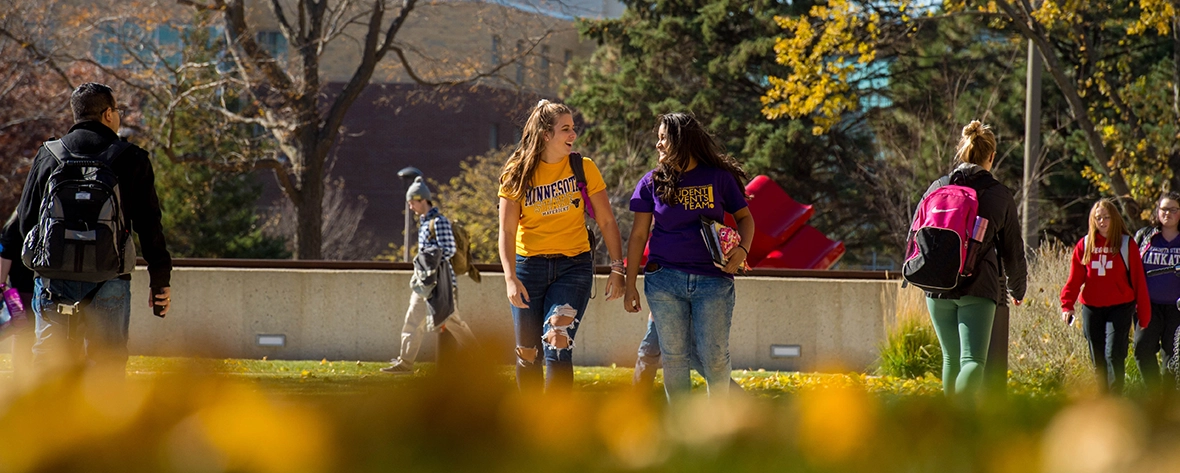 Students walk to classes through fall colors on campus.
Welcome to the Fall 2026 NextGen Newsletter!
Building NextGen Together–NextGen Executive Director Susan Strubel
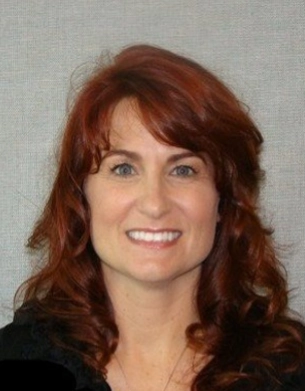
Susan Strubel, NextGen Executive Director
Returning to the NextGen Program feels a bit like coming home. During the Human Capital Management (HCM) and Finance implementation, I had the privilege of working alongside many of you as we laid the foundation for one of the largest transformations in the history of Minnesota State. Today, I'm honored to return as NextGen Executive Director to help lead the next chapter of that journey.
NextGen has never been just about implementing new technology. Technology is the tool, but people are what make transformation happen. At its heart, this work is about creating a better experience for students and giving faculty and staff the tools and information they need to support student success. Across all 33 colleges and universities, we're building a more connected, accessible, and manageable environment that will help students navigate their educational journey while making it easier for employees to do their work.
I won’t pretend that this is going to be easy. I know many of you are balancing full workloads while continuing to serve students and making time to move NextGen work forward. I want you to know that I understand the capacity and resource challenges that come with a project of this scale, and I don't take your efforts for granted.
My experience with HCM and Finance also reminds me of an important lesson: that transformation doesn't happen on go-live day. In many ways, that's where it begins. Although we celebrated a significant milestone, it wasn’t the finish line—it was the beginning of the next leg of our journey. Since go-live, our work has continued through learning, stabilizing, refining, and finding solutions to the challenges that arise.
That experience also reinforced an important mindset: our goal isn't perfection on day one. Our goal is to build a solid foundation that we can continue strengthening over time. That's what successful transformation looks like, and that's the mindset I bring to Workday Student.
Throughout my career, whether at Minnesota State, the University of Minnesota, Mayo Clinic, or IBM, I've learned that lasting change is founded on strong partnerships, open dialogue, and trust. Those principles will continue to guide my work as we move NextGen forward together.
I’m deeply grateful for your commitment to this work and for what you have already accomplished. I'm excited to be back working with so many dedicated people across our colleges, universities, and the system office, as we continue building the future of Minnesota State.
Honoring our Accomplishments and Building for the Future–Vice Chancellor of Information Technology and CIO, Stephen Reed
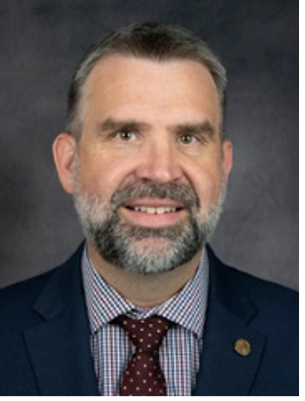
Stephen Reed,
Vice Chancellor of Information Technology and CIO
I am grateful and excited for the opportunity to serve Minnesota State as Vice Chancellor of Information Technology and Chief Information Officer. As I step into this role, I bring a perspective shaped by 26 years in higher education, including nearly 20 years with Minnesota State.
My Minnesota State journey began in the classroom as a faculty member and program director at Anoka-Ramsey Community College. Since then, I have served in a variety of roles, most recently as Senior Vice President and Chief Financial Officer at Metropolitan State University. Each experience—from faculty member and academic dean to CIO and CFO—has deepened my understanding of our system and the important work we do together.
As I become more deeply involved in NextGen, I am gaining an even greater appreciation for the complexity of Minnesota State and the tremendous work underway to prepare us for the future. Even after nearly two decades within Minnesota State, I continue to learn how interconnected—and how varied—our work is across our colleges and universities.
Most of us naturally understand Minnesota State through the lens of our own institution or area of work. Yet our 33 colleges and universities have distinct structures, processes, and ways of serving students. Bringing those perspectives together as part of a transformation as significant as NextGen is both challenging and essential to building a stronger future.
Building on a Strong Foundation
As we talk about NextGen and the transition to a completely different and new technology, it is important to recognize what our current technologies have made possible. The Integrated Statewide Record System (ISRS) reflects how innovative and responsive we have been as a system. It also serves as a mirror of the depth, scope, and complexity of who we are as a system. These technologies have served Minnesota State well, supporting decades of growth and process changes while enabling faculty and staff to successfully serve generations of students.
Moving forward does not require us to diminish what came before. Instead, it allows us to honor that foundation while preparing for what comes next.
NextGen recognizes that Minnesota State has changed, technology has changed, and the expectations of our students and employees continue to evolve. The systems and processes that brought us to where we are today will not necessarily be the ones that carry us through the decades ahead.
Learning and Adapting
One of my early realizations in this role is that NextGen is even larger and more complex than I understood from my campus perspective. This is not simply a technology implementation. It touches people, processes, policies, data, technology, and the ways our institutions work together. A tremendous amount of work has already been accomplished, and we should be proud of that progress. At the same time, a transformation of this scale requires us to keep learning, reflecting, and improving.
There will be times when what we learn leads us to adjust our approach. We may communicate differently, change sequencing, reconsider a process, or find a better way to engage our institutions. Those adjustments do not diminish the work that came before; they build on it. Continuous improvement requires us to ask: if we knew then what we know now, would we do this the same way? When the answer is no, we have an opportunity and a responsibility to adapt.
And the commitment does not end at go-live. In many ways, continuous improvement becomes even more important once a new system and process are in place. Go-live is not the end. It is the beginning of an on-going commitment to assess what is working, listen to the experiences of users, find opportunities for improvement, and make adjustments.
Moving Forward Together
Perhaps most importantly, I see NextGen as a shared transformation. Our campus leaders, faculty, staff, students, and implementation partners all bring important perspectives to this work. We need those perspectives. We need to listen to one another, understand how decisions affect our institutions, and continue finding meaningful ways to partner and communicate across Minnesota State.
As we move forward, I remain committed to listening, learning, and strengthening the connections between our institutions and the NextGen effort. The future we are building will not be defined by technology alone, but by the people, partnerships, and shared purpose that bring it to life. Now is our opportunity to lead with curiosity, listen deeply, act with courage, and stay focused on the students and communities who are counting on us. Together, we can honor the foundation that brought us here, learn from one another along the way, and build a stronger, more connected Minnesota State for the future.
Inside Architect and Configure: Building the Future Workday Student Experience Across Minnesota State
The Architect and Configure stage of the Workday Student implementation is well underway. This is where planning becomes reality. Campus representatives from all institutions are designing future-state processes, configuring Workday functionality, preparing and validating data, developing integrations, assigning security roles, and testing solutions that will support students, faculty, and staff for years to come.
Designing the Foundation
The Architect and Configure phase focuses on how Workday Student will support academic operations and business processes.
Through workshops, content design sessions, validation exercises, and workgroup discussions, institutions are working out how Workday Student will handle everything from academic calendars and course catalogs to enrollment, grading, financial aid, residency, and student information. This work is organized into four worksets, each with its own deliverables and an iterative cycle of design, configuration, testing, and validation.
Recent work has focused on building core academic structures and calendars, validating programs of study data, and working closely to align academic policies with curriculum management. Campus input throughout this process is helping the future system reflect both systemwide goals and the needs of individual campuses.
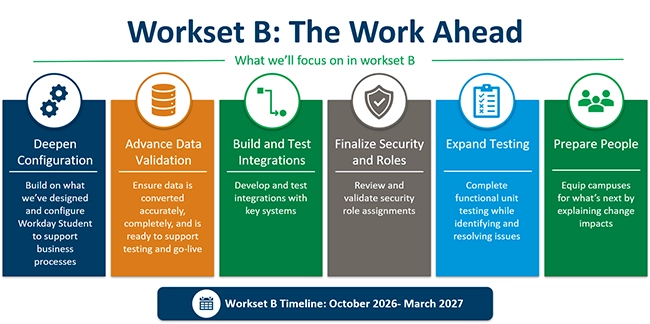
Bringing Workday Student to Life
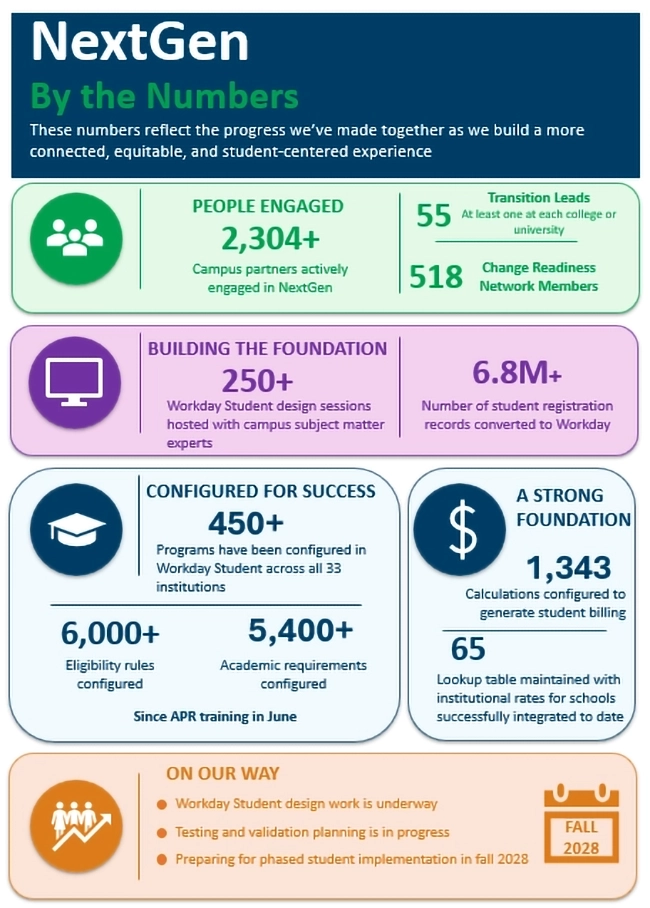
One of the largest collaborative efforts is occurring within the Advising team, where representatives from all 33 institutions are building Academic Program Requirements (APRs) that will support future advising, academic planning, and degree progress tracking.
The Student Financials team is configuring tuition and fee calculations and validating billing processes, with the foundation of student billing already successfully generated across 11 institutions. Recruiting and Admissions, Financial Aid, and Student Employment teams are also advancing configuration and testing activities across the Workday ecosystem.
Together, these efforts are transforming business requirements into a working solution.
Creating the Data Foundation
Preparing data for Workday Student is one of the largest efforts underway during Architect and Configure.
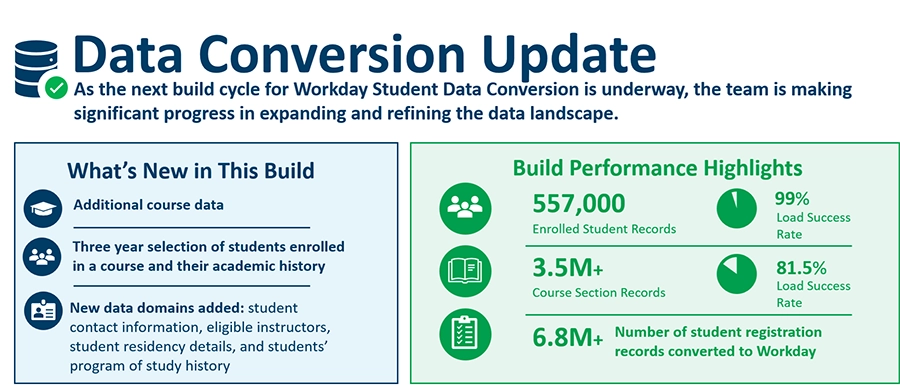
Teams are converting and validating student contact information, academic history, residency information, programs of study, course enrollment data, and registration records. Institutions continue to play a critical role by reviewing converted data and validating information before it is used in future testing activities.
The scale of this work is significant:
- 557,000+ enrolled student records loaded with a 99% success rate
- More than 3.5 million course section records processed
- More than 6.8 million student registration records entering validation and loading activities
Building a Connected Ecosystem
Workday Student is only one part of the broader technology ecosystem supporting Minnesota State.
Institutions have identified nearly 2,000 companion projects, including integrations, reports, forms, and other solutions that will support business needs beyond the student information system. Several community companion projects are already underway, allowing institutions to collaborate on common needs and shared solutions.
Testing Is Already Underway
Project teams are validating configurations, reports, integrations, and business rules through Functional Unit Testing, with test case execution progressing steadily and on track for completion. Campus representatives are also participating in hands-on validation exercises that provide direct experience with Workday Student and valuable feedback to strengthen the solution.
These activities help ensure the system performs as expected while creating opportunities for continuous improvement.
Looking Ahead
As Architect and Configure progresses, teams will continue advancing configuration, data conversion, security activities, companion projects, and testing efforts across Minnesota State.
The work underway today is building the foundation for the next phase of NextGen.
Together, Minnesota State institutions are not just preparing for Workday Student. They are helping build it.
This phase makes NextGen project goals more visible, more tangible, and more real for campuses. Continued partnership and engagement will be essential to success. Employees are encouraged to participate in a Community of Practice; these groups play a key role in shaping the work by sharing feedback and preparing individuals and campuses for the changes ahead.
Learning from Campus Feedback
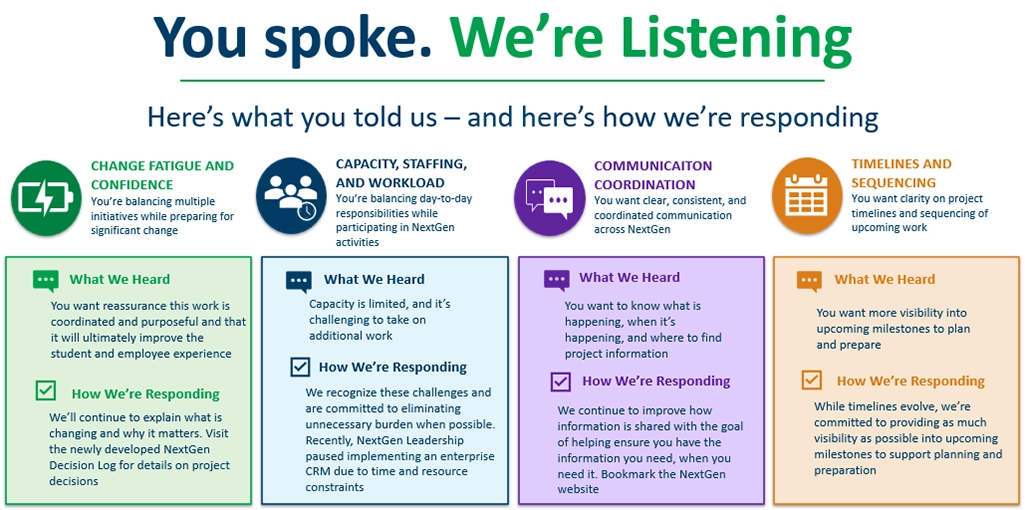
One of the strengths of Minnesota State is our willingness to work together. For several months, faculty and staff across our colleges and universities have shared thoughtful feedback through campus conversations, design sessions, engagement activities, and through their campus transition lead. That feedback helps shape how we approach NextGen and how we support campuses throughout the transition. While every institution has unique experiences and priorities, several common themes have emerged across the system.
Change Fatigue and Confidence
Many of you shared that you're balancing multiple initiatives while preparing for significant change. We heard a desire for reassurance that this work is coordinated, purposeful, and will ultimately improve the experience for students and employees. NextGen is a long-term investment in the future of Minnesota State. As we move forward, we'll continue to explain not only what is changing, but why those changes matter and how they support our North Star of delivering the best educational experience in the state. Be sure to visit the newly developed NextGen Decision Log on the NextGen Hub, designed to provide more details surrounding project decisions.
Capacity, Staffing, and Workload
The most consistent message we received was about capacity. Many campuses expressed concern about balancing day-to-day responsibilities while participating in NextGen activities.
We recognize these challenges. As project work continues, we're committed to providing advance notice whenever possible and identifying opportunities to streamline work to eliminate unnecessary burden. To this specific concern, NextGen project leadership paused work on implementing an enterprise-wide Customer Relationship Management (CRM) system due to time and resource constraints.
Communication Coordination
You asked for communication that is clear, consistent, and coordinated across the system. Specifically, you want to understand what is happening, when it's happening, and where to find reliable information.
We continue to improve how information is shared through the NextGen website, NextGen Hub, Communications Archive, Campus Change Readiness Networks, and leadership communications. Our goal is to ensure campuses receive timely updates with clear expectations and consistent messaging.
Timelines and Sequencing
Many of you asked for greater clarity around project timelines and the sequence of upcoming work so your institution can better plan resources and prepare for change.
While implementation timelines will continue to evolve as the project progresses, we're committed to providing as much visibility as possible into upcoming milestones, engagement opportunities, and planning activities. Earlier communication helps campuses prepare, reduces uncertainty, and supports more effective planning.
Thank you for your Partnership
Feedback is one of the most valuable tools we have for building a successful NextGen implementation. Your perspectives help us identify what's working, where additional support is needed, and how we can improve the experience for campuses across Minnesota State. Thank you for continuing to ask questions, share ideas, and engage in this work. Please continue to do so by reaching out to your campus transition lead. Together, we're building a stronger, more connected future that better serves our students, faculty, and staff.
Workday Student: Building the Foundation
From academic programs and advising, to financial aid, admissions, billing, security, and testing, teams across Minnesota State are turning design decisions into working Workday Student configuration. Workset A established important foundations. Workset B will take the work deeper, with expanded configuration, validation, testing, and campus engagement.
Explore updates from each Workday Student functional area and see what’s coming next.
Beyond Workday Student: Preparing the Connected Environment
NextGen extends well beyond Workday Student. Faculty Workload Management is preparing for its next chapter, nearly 2,000 companion projects have been identified across 54 campuses, Student Employment is moving from design into configuration and testing, and student records are being prepared for data conversion.
See how these projects and workstreams are preparing Minnesota State for the broader NextGen transition.
Word on Workday
 A shared vocabulary is essential for effective systemwide work. The Student Phase Glossary brings together commonly used terms and definitions from the NextGen Student project and the Workday Student implementation. Designed to support clear, consistent communication across campuses and functional areas, the glossary reflects current project language and will continue to evolve over time. As the work progresses, definitions may be refined, and new terms added based on feedback and emerging needs—helping ensure the resource remains clear, relevant, and useful for the Minnesota State community.
Stay Connected and Engaged
Want to stay connected and learn more about what’s ahead? Bookmark and visit the NextGen website. We hope you’ll find the website provides clear, engaging content that helps you understand what’s happening, why it matters, and how it impacts you.
Have questions or want to connect with the project team? We’d love to hear from you—reach out anytime at NextGenERP@minnstate.edu.